Tuesday, October 15, 2013

How To Light A Sego Palm

Sago Palm 1 WEB SIZE

SEGO PALMS are among the most difficult landscape plants to accent, in my opinion. Personally, I think the sego palm is a very attractive plant, but I also think it could be considered the “joke” of the palm tree world. Normally when you think of palm trees, you think tall, skinny trees with leaves at the top. Then you see a sego palm - which is very short and wide and quite dense.

When lighting the usual palm tree like a date palm or a sabol palm, you’ll often see two “bullet” lights shining up the trunks and illuminating the tree and canopy. These fixtures will usually use a narrow beam to really make the canopy pop. But what about our humble short, squatty sego palm? Surprisingly, it seems that I always see that same bullet light method used for these trees – as though every palm can be illuminated exactly the same way, which just gets all over me! Using this standard “palm tree lighting” method simply won’t work on a sego palm. Although it could be illuminated with a bullet light pointing at it from the side, it would have to be placed several feet away from the tree and use a much wider beam spread. Generally, I find these light fixtures positioned within a foot of the sego palm, and in this instance, there is only a round spot of light on the bushy tree and that’s it. Not attractive and certainly not enhancing these very interesting trees.

15087AZT

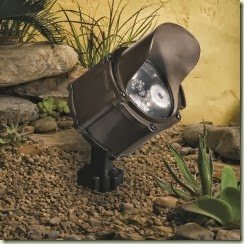
So, what is the best way to light a sego palm? My favorite way to do this is from above. Since these trees are short and wide, we can accent the entire canopy at one time when placing a fixture above the plant. Since the leaves are very dark and thick, the leaves will almost look like they sparkle at night when a soft breeze blows through. There is also a much lighter colored center that looks very nice this way as well.

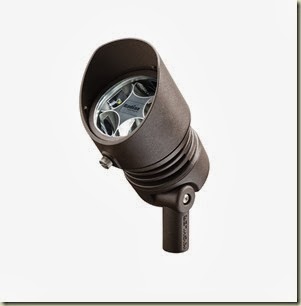
But what if there is no tall object to allow for down lighting? The next best thing would be to use a wash fixture which throws a very wide light beam. Even with these very wide pattern emitters, you may need more than one fixture, depending on the size of the tree and angles of visibility.

16070BBR27

In another instance, let’s say that you happen to have a very old sego palm tree that has grown quite tall. Now, the tallest sego palm tree that I have ever seen was about 6’ tall, and I have only seen two of them that large. Maybe in California they are bigger? I don’t know, but here in central Texas, that’s the biggest I’ve seen. If you do come across trees that size, then you may want to use a couple of wash fixtures from below to accent the trunk and underside of the canopy, like the taller palm trees. But I still recommend using the very widest beam instead of the narrow beam bullet fixtures to get the best possible result.

Sego palms are not a very cheap tree and they really can become a nice focal point in the landscape when properly illuminated.  Please leave your comments below and if you would like more information on lighting palm trees, drop us a note at info@night-scenes.com

Sunday, October 13, 2013

Fire Ants, Get Rid Of Them!

Every spring and fall we talk about fire ants because every year we confront this problem.
These pests are not native to the United States but were accidentally imported from South America in 1918 and introduced first in Mobile, Alabama. Since then they have spread to all the southeastern states and continue to trek west.
mound_diagram_lg1
They are ruthless critters, invasive and destructive. If you have never encountered these tiny beasts, one of the most important things you should know is that a fire ant bite HURTS! If you’ve ever stepped in a fire ant mound you know first-hand that they got their name from the burning, stinging pain inflicted by the bite, and the blister that forms afterwards. If you’ve ever had a child fall into a fire ant mound, you’ve felt their pain. Also keep an eye on your pets; these fire ants can really do a number on them and will be hard to detect beneath the animal’s fur. Fire ants mound up over light fixtures or get inside causing tremendous damage; they also invade transformers and destroy them.
Fire ant stings USDA
Outdoor light fixtures, no matter how good they are, are no match for these creatures, and a manufacturer warranty does not cover damage by fire ants. This is why it is so important to treat your southern property for these pests. Although we used to recommend a product called OVER-N-OUT for the treating of your lawn, since they have changed the formula we can no longer recommend that product. It used to be that you could treat your lawn once a year with that product and it was good-to-go, but not anymore. Now the instructions say twice a year (but the price is still the same) and even that doesn't work. Believe me, I tried it at my house. If you have a lawn maintenance company, ask them to treat your property for fire ants. Preventative treatment against fire ant damage will certainly save you the expense and inconvenience of replacing part of your landscape lighting system and a costly transformer.
Knowing your lawn is safe from the pain and destruction of fire ants will help you enjoy your outdoor spaces and landscape lighting even more in the months to come!
If you notice issues with your lighting system and you also notice that you have fire ants, you may need to call in a professional.  If you’re in our service area, drop us a note and we’ll get you taken care of.  info@night-scenes.com

Thursday, October 10, 2013

LED Troubleshooting

Who would have thought just 10 years ago that an outdoor lighting company would have to learn about troubleshooting electronic components? Most people don’t realize that LED lighting is made up of all kinds of electronic circuitry with diodes, resistors, wires, drivers, and more. Gone are the days of just finding the burned out light bulb.

Regular halogen or incandescent light bulbs have a filament which eventually burns in half resulting in a burned out light bulb. An easy fix – just replace the light bulb.

led-circuit-25416685

LED lights are a whole different animal – they do not have filaments. Instead, they have electronics. Electronics that look a lot like you took a computer apart. This is one of the reasons the LED lights cost a lot more that a strand of wire in a glass tube.

Moisture is the greatest enemy an LED light can face and is the culprit most often in a failure. Imagine what might happen if you dropped your cell phone in your landscape and the irrigation system turns on.  It’s important to make very sure that any LED product that is installed in the landscape is completely sealed and potted to insure that no moisture can get into those electronics.

15731BBRcowl

The primary problem now when a light goes out is that it’s usually a short circuit in a single LED fixture or lamp causing an entire run of lights to go out. So, instead of looking for a burned out light bulb and replacing it, we may have to disconnect fixtures completely, one at a time, to find the one that is causing the problem. Because of the complexity of the fixtures and the possible troubleshooting, it is wiser to call a professional in than to tackle the problem yourself. Fortunately, it doesn’t happen often and good warranties can prevent this from being very costly and of course if it’s a NightScenes system that is less than 3 years old, there is no cost at all to replace a bad LED fixture. 

How is your LED outdoor lighting performing?  Does it need a check-up?  We’ll be happy to take a look, just drop us a quick note at info@night-scenes.com
Tuesday, October 8, 2013

Business is Business

WARNING: I’m going to get on my soapbox now.

I have written many times in local publications about business – particularly small business, and what it takes to start up and stay in business. Although it’s impossible to get through the day without transacting some kind business with someone, many folks simply don’t realize that all business ventures are not operated on the same scale. Those in the work force are more likely to work for someone else than to own their own companies, making it difficult for them to truly appreciate the struggles and obstacles that the small business owner must overcome to stay afloat, pay their bills and feed their family. As a small business owner myself, I face a new challenge every day in meeting profit goals so that I can adequately pay my crews (and myself), pay the basic expenses for the company, fulfill my tax obligations to state and federal government, and have enough operating capital left over to cover unexpected budget busters like a flat tire, a busted piece of equipment or an increase in materials. While I won’t really go into all the things that go into making a business run on a budget, I am going to blow off a little steam.

business 2

Our company is a FOR PROFIT venture. This means that when we provide products and services, we will charge a fair price that will help us to cover ALL of our business expenses including the materials used, labor, gas and truck maintenance, office space, electricity, phone, taxes, advertising, etc. After all of those expenses are covered, we want to have a little bit left over. This is known as profit. Profits are used in a variety of ways: re-investing in the company to buy better equipment so we can provide better services, incentive bonuses for our technicians when they do a superior job, educational seminars for the crew, saving for leaner times, or even making donations to charities that we believe in – just to name a few. At NightScenes, we think all of these are reasonable and justified as we conduct our business with integrity.

business 1

We also support other small businesses and try to engage with local companies as often as possible. We share many of the same struggles, and it’s just a good practice to do business with your neighbors. But I know that these companies are also FOR PROFIT businesses facing many of the same expenses and trials that I battle. So it tries my patience a little when a fellow local business owner asks for a “favor” or expects me to work for free while he’s trying to save a buck. It just seems disrespectful. Don’t get me wrong – I love to work with these folks, and will cut a deal to minimize my own profit occasionally; and I even enjoy a good barter relationship. But if I do cut another business a great deal, it is insulting to me and my company to be asked for something more for FREE. This is really taking advantage of my good nature and neighborly good will. Any honest business that agrees to work a deal with little or no profit, is investing in that relationship. Asking for more is expecting that accommodating businessperson to reach into his/her own pocket and pay for the privilege of working. Not really a square deal, huh? Any additional work that was not included in the original agreed price is EXTRA -- and therefore, needs to be billed separately in order to avoid a loss to the business providing the service.

Business 3

We all know that today’s economy has caused most businesses – even in Texas – to be cautious with their spending, and careful with whom they do business with. This is why it is becoming difficult to do “favors” for fellow entrepreneurs. These are the people we hoped would KNOW BETTER since they are also in the same boat. Unfortunately, some of these unscrupulous folks may only stay in business because they have been successful in getting others to work for them for little or nothing - and they take advantage of this generosity. While we’d like to believe we can be neighborly, it may just be too expensive. This is what the saying “no good deed goes unpunished” means, right?

It used to be that this sort of unfair or lopsided relationship was a rare thing. But, sadly, it happens far too often these days, forcing some of us to always keep our guard up, protecting ourselves and our companies against costly situations like this. Unfortunately, in one case, I’m afraid I’ve done my last “favor” for a local business.

It can be a hard lesson, but you know what they say: Business is business.   Thank you for letting me vent, now back to lighting.

Sunday, October 6, 2013

Mercury Vapor Lighting-Revisited

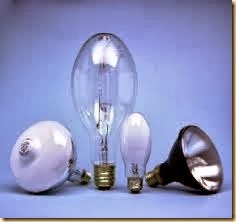
We’ve all seen them. The distinctive eerie green glow of mercury vapor lighting dots the landscapes of commercial properties all over the world casting a harsh glare like alien beacons in the night. More frightening than the spooky appearance of these lights is the elemental make-up of the fixtures: mercury. Because each of these fixtures uses mercury to produce light, the EPA Act of 2005 banned all manufacture and/or import of this type of lighting effective January 1, 2008. As existing supplies of the necessary ballasts for these lighting fixtures dwindle, some folks are using Metal Halide ballasts with Mercury Vapor lamps. In doing this they are using lamps that they already KNOW are being phased, out instead of doing what is in the best interest of the client long term! This takes a bad light to new levels of abuse by sucking up even more energy since the metal halide ballast does not work as well for mercury vapor lamps. This 1940’s unit was discontinued by the United States for its inefficient use of energy and potential environmental hazards. Putting this kind of band-aid on an already power-hungry monster is simply not a good idea for anyone.
MV lights
Besides the above mentioned issues with mercury vapor, there’s also the look of the light. Those who install this lighting as down lighting call it “moon lighting.” My question is, since when does the moon produce a green light? Maybe the Vulcan moon produces green light, but the moon of planet Earth produces a white light since the surface of our moon is gray and it reflects the light from our sun. This ghoulish green light makes the leaves of trees look pretty good since it brings out the green color, but it makes human skin look grey - like a corpse. This is because it has a terrible CRI (color rendering index).
NightScenes has never advocated the use of these fixtures for any application. In fact, we rarely use any fixtures or lamps other than energy-saving, earth-friendly LED now – even for commercial properties. The good news for mercury vapor users is that retro-fitting with LED is now possible! This cost effective alternative uses only 14 watts or so, instead of 100 (or 175), and is rated for more than twice the life of the mercury vapor lamps. Rated for 50,000 hours of use, these LED lamps save money in maintenance as well as the incredible savings of 80% on the energy bill. LED lamps can produce the same light output in color and intensity. Warmer colors are also available for those looking for a more natural lighting effect. So what’s not to love?
Whatever you do, do not allow an electrician or anyone else, talk you into using a metal halide ballast to keep your old, out dated, being phased out, ugly, poisonous, and environmentally destructive mercury vapor lights! It is way too easy - and may even be less expensive - to convert to LED.
http://lightingcontrolsassociation.org/2007-energy-law-eliminates-sale-of-probe-start-metal-halide-fixtures/
http://www.gpo.gov/fdsys/pkg/PLAW-110publ414/pdf/PLAW-110publ414.pdf
http://www.gpo.gov/fdsys/pkg/PLAW-109publ58/pdf/PLAW-109publ58.pdf no

Do you have lighting that needs to be updated?  Maybe NightScenes can help.  Drop us an email at info@night-scenes to set up an appointment.

Please be sure to leave us your comments below.

Friday, October 4, 2013

Safety Lighting For Halloween

The little ghouls are on the way! They show up with bags, buckets, and body bags (I mean pillow cases) to collect as many goodies as they can carry. Yes, Halloween is almost here – and, of course, I’m talking about outdoor lighting to make sure these little monsters make their rounds without tripping and getting themselves injured. We don’t want any unintentional spilled blood, now do we?

trick or treat

We all know that if we expect these little princesses, super-heroes, aliens and goblins we should leave our front door light on, right? While this is a great way to let them know they are welcome, does it also do a good job of lighting the approach to and from your door? Are any steps along the way to your haunted mansion illuminated well? If you have a flagstone walkway with grass between the stones, is it well lit to help avoid an accidental fall? Do you have a lot of trees in your front yard that block a lot of ambient light that is in the area, making the walkway feel darker? I understand that you want to create a super spooky atmosphere for the holiday, but safety can be a serious concern – and a trip to the hospital or the ensuing lawsuit is no way to celebrate Halloween!

If you or your minions will not be out closely supervising the travelling hordes on your property, then the best way to make sure everyone can move around safely is to use some well -positioned quality down lighting from trees which allows for a very wide and even light. Path or spread lighting fixtures are also a good idea if you don’t have large trees near your walkway. A good path fixture will cast a ring of light that is approximately 10’ around and shines the light down onto the walkway without shining into the eyes of the person walking along the way. It’s also smart to stagger the fixtures from side to side, or place them all on one side of the walkway to avoid the “runway” look that we see far too often.

Please don’t use flood lights which can shine into the eyes causing temporary blindness. It’s very hard to see where you’re going when you have a bright light shining right in your eyes.

Remember that these little ones frequently have something over their face which can interfere with their vision, so anything you can do to make it safer for them to receive their treat would make Mom and Dad Monster especially grateful. Happy Halloween - and may the lighting force be with you!

If you think you may need a little more safety lighting around your home, let us know.  We’ll be very happy to take care of that for you.  info@night-scenes.com

Wednesday, October 2, 2013

How Resorts Can Save Money

We have covered the topic of LED lighting saving money for home owners and property owners associations many times but have rarely talked about larger properties like resorts or other larger properties.  These could include spas, museums, parks, etc. 

16008AZT30

Below is a video from our friends at Kichler Lighting that talks about a project in Hawaii.  Now I know that I’m in central Texas and it’s not Hawaii but the principles are the same.  These properties can save a lot of money in energy but even more money in maintenance costs!  Let’s face it, labor costs a lot more than electricity in central Texas but if we can save in both categories, then we’re that much better off. 

http://youtu.be/DCmDVu2oPOs

On another note, we installed an LED lighting system for a local sub division where a halogen system was originally designed to be installed.  I’m not actually including the project name because, to be quite frank, we didn’t design the system and we don’t really like the way it looks from a design standpoint.  It was designed by an architect and not a lighting designer.  Anyway, we were able to install a 100% LED system for a lot less money than the halogen system would have cost to install.  Now this is a new installation and not a retrofit situation but it goes to show that LED is not as expensive as most people seem to believe and in some cases can actually be far more cost effective than any other light source.

We look forward to your comments below.