Monday, September 30, 2013

Security Lighting for the Commercial Property

My friends at CAST Lighting have posted a very good blog post about their 24 volt low voltage security lighting system.  This system is geared for commercial use more than residential use.  This is a case study from Pennsylvania State University.

cast-perimeter-parking-lot-4

One of the best things about this system is that it is completely portable!  Construction sites that may be around from a month to a few years can really benefit from this type of system which can be moved from one project to the next.

Take a read here http://www.cast-lighting.com/blog/2013/07/portable-led-perimeter-lighting-retrofit-for-construction-sites-cast-lighting-and-penn-state-case-study/ and leave me your thoughts.  I look forward to hearing from you soon.

Learning The Hard Way About LEDs

“Experience is the best teacher of all.” -Henry Callahan

Our company has been installing LED outdoor lighting systems since 2008. Our experience has taught us a lot over those years. Like which LED products are very good, and which products we should avoid like the plague.

IMG_0864

The LED lighting industry has changed rapidly and dramatically in the last five years – mostly for the best. But along the way, we’ve bumped up against some bad products. It was bound to happen – the products were new and the marketing was usually very compelling. Sadly, in one instance for us, the marketing was a whole lot better than the lamps. In this particular case, we were purchasing LED lamps from a manufacturer who (we found out later) was getting lamps from a factory in China which simply was not doing a very good job. After installing about 900 of these lamps all over the great state of Texas, we had to go back to replace almost every single one of them. Naturally, the manufacturer was happy to replace them – initially with new lamps from the same factory. Eventually, we decided we just couldn’t accept this replacement offer, and required the company to buy back all the bad lamps. Finally, they started to carry a higher quality product developed specifically for the landscape lighting industry, and were able to exchange the bad lamps for new and much better replacements.

It was an expensive lesson for all of us. Although we got free replacement products, we still experienced some serious frustration, and had to pay our team’s labor costs for all of the replacements over a period of about three years. Amazingly enough, we still have a few of these lights out there, but we’re getting them all replaced as they go out.

bi pin LED

The big lesson we learned was what to look for when it comes to an LED product that is going to be used in the outdoor environment. It’s important to understand that most LED products that are available to the general public are designed to be used indoors. They may not hold up very well in a sealed fixture, or in environments that have a lot of humidity, like a well-irrigated landscape. Of course, newer LED products – commercial or contract grade products -- that are designed to be used outside do cost more than the stuff you find at the local big box stores. But since they are made specifically for the purpose that they are being used for, they will last a lot longer, as they should.

We learned the hard way to avoid the hype, ask for samples, and test new products ourselves. We engage the manufacturer more directly and read a lot more reviews than we used to – so we don’t repeat a costly mistake. All of the products we use now have a proven reliability history. We have far more confidence in the products we install now than we did in the much earlier days of LED development.

No product is perfect every time; failures will still occur even among the best. Living with a less than 2% failure rate is something we feel pretty good about, and is easy for us to stand behind. That’s what our experience has taught us.

Our LED experience can help you to achieve your outdoor lighting desires with quality LED products.  Let us know if we can help you by dropping us a note at info@night-scenes.com

Saturday, September 28, 2013

Shorter Days and Longer Nights. Welcome to Fall

Have you noticed that the days are getting shorter?

Every September we celebrate the official beginning of autumn, and we begin to lose about a minute of daylight every day. Although that doesn’t seem like very much, over the course of a month, it adds up to a half hour of lost daytime! Shortly after the equinox, (about 6 weeks now, being in November) in most of the country, we’ll also be setting our clocks back an hour for the end of daylight savings time and lose a whole hour in one day!

Fall back

This brings a few things to my mind. First, here in central Texas our summer days are very hot and it’s just flat uncomfortable to be outside until very late at night -- and even then it’s not easy in the mid-summer months of July and August. So the cooler fall and winter evenings are much nicer to get outside and enjoy. And it won’t be long before it’s dark when we get home from work -- which means there may be challenges to moving around safely on your property. Finally, there are always some issues with timers that come up whenever there is a time change.

I actually like spending time outside in the fall and winter evenings, and it sure is wonderful when it’s not so dark and scary looking out across my yard. A little bit of soft lighting makes this time outside much more comfortable for everyone, even a big tough guy like me. There are creepy and menacing things skulking around out there in the darkness. Even if it’s just a skunk - I want to see it, so I need some lighting!

steps 2

Also important is that we want to be able to navigate safely when the sun goes down. I notice that as I continue to age, my eyesight is not as good at night as it used to be; it takes longer for my eyes to adjust to the darkness. Arriving home after dark, or entertaining in the evening gives me pause to insure that my walkways are well lit reducing the chances for a fall and causing serious injury for myself or my guests.

Finally, there is the whole timer issue. It seems that many lighting companies will still install the old mechanical timers that must be constantly reset for changes in time -- which actually happens every single day. Starting on the first day of winter, the days begin to get longer (in the northern hemisphere) bit by bit, and the nights get shorter. Then the first day of summer is the longest day of the year, and each day after gets just a little shorter. So these mechanical timers will always need to be adjusted, or it results in lighting systems operating during daylight hours unnecessarily, or failing to come on until after dark. Both instances can be expensive, though in very different ways. We have never installed these type timers in our systems. Way back when we first started out, we used a digital timer with a battery back-up, along with a photo cell, to insure the lighting would not operate until it was dark enough; therefore, we only had to adjust the timer a couple of times a year. Now we have a truly great advancement: astronomical timers! WE LOVE THESE THINGS! We can program in your zip code (or longitude and latitude) and the timer automatically adjusts every single day. It even adjusts for daylight savings time! Now we simply change the battery once a year when we’re already on the property for the semi-annual spring or fall maintenance check, and the system is always working properly when needed.

astro timer

We hope you will enjoy these more pleasant temperatures coming soon in the fall and winter. Please let us know how we can help you feel a little safer and more comfortable during those cooler but darker hours.

Thursday, September 26, 2013

Solar Landscape Lighting? Now It’s Possible.

I am often asked if we would install solar lights. Although I’m thinking many different things at that moment (and unfortunately, very few of those thoughts are positive) I simply smile and say, “As of now, there is not a solar light available that is worth the money, or will do a very good job enhancing your landscape; so no, I do not install solar lights.”

solar lights

However, let me say that I am definitely in favor of saving energy, and I think that solar is a great way of producing electricity. And I love the sun – who doesn’t love the sun?

But so far, every solar light fixture product I have seen is so sub-standard that I can’t risk my own reputation or integrity to stand behind them, to be quite honest. They use very cheap LED chips which give off an ugly blue hue. As color is such an important part of the desired design result, this is unacceptable. They also do not produce enough lumens to actually illuminate anything, including a walkway. The solar path lights seen in many neighborhoods are actually nothing more than walkway markers because all you really see are eerie glowing balls. There is not nearly enough light to create a safe walkway or highlight a step. Sadly, in my experience, solar spot or flood lights are pretty much an industry joke in every aspect.

Why is it that these products just don’t work?

In order for a solar reception panel to collect enough sunlight to power a lighting fixture it has to meet several important criteria: size and direction matter. Because the solar panel on these plastic light fixtures is so small, there is just no way for it to collect, convert and produce an adequate amount of energy to charge the battery which will then operate the LED illuminator with enough lumens to make a difference in the landscape. Then, if you place the fixture in a shady area, or clouds move over it - forget it.

You can get a pretty good idea of the complexities of solar energy production from this article here: http://en.wikipedia.org/wiki/Solar_power

After getting all of that off of my chest, I can say that there actually is a way to get great solar powered landscape lighting! I promise that I’m not losing my mind here – stay with me ….

One of the great things about LED landscape lighting is that it uses so much less energy than the old halogen lighting - about 75% less in fact. Therefore, we can operate a lighting system off of a solar collection system - and the collector does not have to be very large, depending on how much lighting is needed. As long as there is a place where a solar collection system can get plenty of sunshine, then there is no reason now that a solar outdoor lighting system can’t be created. To learn more than you probably need to know about these systems and how they work, you can check out this article: http://en.wikipedia.org/wiki/Solar_thermal_collector

Solar

Here in central Texas, we have a lot of ranches with really interesting rock entries, particularly down dark county roads, far away from the city lights. We recently had the opportunity to work with a ranch owner who posed this dilemma: They have a solar operated gate control, but people can’t see the gate area at night as they’re driving by. This is bad for guests and emergency responders. By installing a separate solar powered lighting system at his gate, we were not only able to make his ranch entry easy to find, it also shows off the cool rock gate structure with the added light enhancement! One more bonus -- it costs less than installing an electrical service, AND there’s no monthly usage fee!

Do you have an area that might be a good place for a solar lighting system?  We can evaluate the area and let you know if it’s possible and worth the money to go solar.  info@night-scenes.com

Monday, September 23, 2013

How Much is Too Much Lighting?

It sure would be nice if there were a simple answer for everyone.

When do you cross the line from not enough lighting to too much? When do you go from not bright enough to too bright? We could honestly spend days trying to answer these two questions, but the science of vision plays an important part, as does personal preference; but we’ll try to give you some good ideas here.

full moon

First of all, a little light goes a LONG way. The human eye adjusts to darkness relatively quickly, so we often discover that our clients appreciate a lower light level than they originally anticipated. Think about this for a moment: the moon is 238,900 miles from the earth. Although we talk about how bright the moon is, in truth it doesn’t actually produce any light, it simply reflects the light from the sun. A full moon here in central Texas is bright enough for us to move around at night pretty comfortably, too. So, a reflective light source from almost 239,000 miles away produces a lot of perceived light. Moonlight often provides a guide when seeking the proper lumens for safe illumination.

I rarely use anything brighter than a 50 watt equivalent light source in my designs; and that will illuminate very large (tall) oak and pecan trees. Lighting smaller plants or structures rarely requires more than the light output of a 10 or 20 watt halogen equivalent light source to do a very good job.

right side

The primary purpose of any good lighting design is to accent the landscape (and architecture), not turn your home yard into Disney Land. Commercial properties may require more light because of other ambient light sources in the area, or for required minimal foot candle illumination of walkways, but residential projects generally do not need nearly as much light. If you live on a 50’X100’ lot and you have 100 lights, I’m pretty sure you have too much. However, the number of individual fixtures may not be as critical in assessing over-brightness as the lumen output of each. This combination must be considered in the design and will be dependent upon the objects, focal points, and safety concerns on the property.

If you get any complaints from a single neighbor about the brightness of your lighting, it could very well be a bit too much; or it may be improperly aimed or installed. If your lighting is shining onto your neighbor’s property, this is called “light trespass” and it needs to be adjusted. Step back and pretend to be your neighbor. If you think that you may have a little too much lighting, then you probably do.

Remember, less is more and it’s better to use lower lumen levels when designing an outdoor lighting system. Your eyes will adjust and your neighbors will happy.

NightScenes is a member of the International Dark Sky Association .  We believe that any property can be illuminated well and still help protect our night skies from light pollution.  We would love to help you asses your outdoor lighting needs in a responsible manner.  info@night-scenes.com

Friday, September 20, 2013

Price-Per-Fixture Quotes?

I still find it hard to believe, but there are some contractors out there who quote lighting projects on a “per fixture cost” basis. There have been lighting manufacturers who promoted this job cost technique to their prospective customers as an easy way to quote a lighting system and “make lots of money as an up-sale to your current business.” Honestly, who doesn’t want to find the easy way to make money today? And to have the quote be so easy to prepare would make the closing quick and painless, right? Not necessarily.

Spicewood back yard

Most quotes using this system I have seen come in anywhere from $150 to $400 per fixture – a pretty wide variance. I’m often asked by home builders to give them a per fixture price. My answer to those builders (and homeowners) posing the price-per-fixture query is, and always will be, NO WAY. Although, in theory, this may seem to be a simple quote plan, the truth is: it’s just not that simple.

How in the world can the smart contractor give a per fixture price for a project without even figuring in things like getting wire under sidewalks, or here in Texas, through rocky terrain? Heck, with some of those builders, we haven’t even seen the property or plans, and they want an accurate cost proposal? A serious business person just can’t operate profitably under those conditions. Advance planning and anticipating the unanticipated problem expense should always be part of a proposal with integrity.

Unfortunately, a domino effect can occur when the contractor starts out with a per-fixture price quote and is then unprepared to handle the unexpected issue of terrain, structure, outlandish expectation or costly mistake. In many cases, trying to cut a corner somewhere else to make up the difference will be attempted. Maybe instead of using waterproof connectors they decide to go with regular wire nuts to save some money. This may not seem like a big deal, but it’s probably the most common cutback we see, and it creates the biggest problems in the future. This little mistake causes corrosion in the wiring, causing the infrastructure of the entire system to fail. Another cost cutting method could be reducing the transformer size – and, therefore, overloading it. It could be that contractor trying to recoup profit from an under-quoted job is to use a cheaper mechanical timer over the more reliable (but more expensive) digital timer. A mechanical timer causes a headache for the homeowner and the service provider because it loses time whenever the power goes out. These are just a few of the more common issues we’ve encountered; there are a lot of ways to cut costs to make up for unexpected expenses, none of them good for the homeowner.

There are far too many factors to consider when designing and installing a quality outdoor lighting system for the contractor to simply give a per-fixture price. Those who use the per-fixture price method are generally either over pricing to make up for anything they think they may run into; or underpricing and hoping all goes well. Those who overprice the system are pretty happy because they can make a lot of money off of the uneducated client, and those who underprice are rarely heard from again to repair the problems that will almost always result.

If you do not want a per fixture quote, but instead want a well-designed outdoor lighting system proposed and quoted honestly, please drop us an email and we’ll be happy to take a look at your property.  info@night-scenes.com .  As always, we welcome any comments you may have below.  Thank you.

Wednesday, September 18, 2013

LED Lamps In The Landscape

Americans are hearing more and more about LED lamps, and are becoming very excited about their benefits, I think. I now have people calling our company and actually requesting LED lighting since NightScenes is well known as the outdoor LED lighting specialist in central Texas.

We’re sure that other outdoor lighting companies in other parts of the world may have different experiences with certain LED products but this is what we have discovered in our part of the world, central Texas.

We have been installing LED outdoor lighting almost exclusively for over five years now, and have seen the good, the bad and the ugly when it comes to LED options. We’ve had great success with some products, and we’ve also had a few major failures where we’ve had to go back and replace several hundred LED lamps at no charge to our clients. The silver linings in these failure clouds, however, are the lessons learned about what to look for in a quality product.

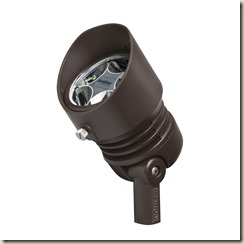
Over the years, we have found that the best option for LED outdoor lighting is integrated fixtures when installing a new system from scratch. We have also discovered which LED integrated fixtures are most effective, and which ones to stay far away from.
16006BBR30

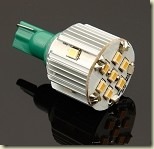
It has taken a while for manufacturing companies to develop high quality LED lamps that can handle the harsh outdoor environment. There has been much progress recently making it possible to upgrade the thousands of existing outdoor lighting systems out there where the fixtures and infrastructure are still in great shape. These systems can now be easily converted to LED, in most cases with simple lamp replacements.
T-5 LED

So, why spend so much money to convert a perfectly good halogen system to LED? There are several reasons, but the biggest reason is the constant cost of maintenance. It appears that halogen lamps are just not lasting as long as they once did. At one time, halogen lamps would last about 5000 hours, as long as they receive the proper voltage. We are finding now that even the very best lamps do not last anywhere near this long anymore. Generally, we feel pretty lucky to get 3000 hours out of a “quality” halogen lamp these days. This means that if a halogen landscape lighting system is operating from dusk to midnight every night, these lamps will only last about a year to year and a half. Consequently, we have to replace all of the lamps in a system every year to avoid multiple calls to the home as the lamps give out a few at a time over a shorter period of time. This is expensive in the cost of materials and labor; additionally, of course, there is the cost of energy use itself which is considerably greater in the halogen products.

Now let’s compare the LED lighting. Some LED lamps available are really BAD, and some are very GOOD; it is extremely important to know which is which. We have learned the hard way what to look for in a high quality product. Each lamp is manufactured with several electronic parts coming from many other manufacturers, and it’s these parts that make all the difference in the world when developing a quality finished product. The truly great LED lamp manufacturers use very high quality parts to create a lamp that will perform as advertised in the harsh outdoor environment. These products are not cheap to purchase, however; but are actually less expensive over time than the bargain priced merchandise because the good stuff will last as long as they say they will.
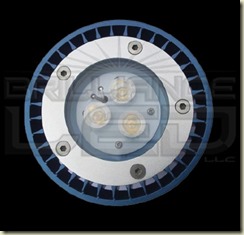
Brilliance PAR lamp

Industry professionals now have access to LED lamps that should last for 40,000 hours; even at that point, the lamp will still be producing 70% of the original output. This is the point where the lamp is considered no longer serviceable by professional lighting contractors. The result is a lamp that would not have to be replaced for up to 20 years, depending on how long it operates each night. This is where the big savings will come into play. The homeowner will not have to pay us (or anyone else) to come out and replace lamps every year. You also won’t be buying new lamps annually. No one will be spending hours on end trying to remove burned on hard water and calcium deposits from the light fixture lens since these LED lamps burn much cooler than halogen (which burn very HOT). This savings adds up to hundreds of dollars a year on some systems. There’s also an LED bonus: the operating energy cost savings of about 75% compared to halogen energy consumption. Although significant, the primary savings is still in maintenance and lamp replacement.

But this does not mean that these LED systems are completely maintenance free. It means that regular maintenance is easier and there should be no materials needed; therefore, will cost a lot less. As plants continue to grow, fixtures may need to be moved or adjusted, or the plants may need to be trimmed. Fixture lenses will still need to be cleaned; but as I said earlier, it’s much easier with LED fixtures since nothing bakes onto the lenses. Our experience is that maintenance labor time on an LED system is about 70% less.

One more thing to touch on is actual cost. Quality is not cheap, so please don’t fall for cheap LED products. You are simply not going to find good and cheap in the same package. You can get good or you can get cheap, and cheap usually costs a lot more in the long run. A quality LED product is going to cost more up front, but will pay for itself far better than the cheap product that you end up replacing far sooner and more often than you expected. Cheap rarely makes for a happy homeowner down the road.

Look to a reputable outdoor lighting company who installs high quality, well-reviewed products. These products should have long and easy warranties that do not require a lot of paperwork, or require the contractor or home owner to jump through hoops to get replacements. We always stress the importance of diligence in research before making such an important investment in your home.

We are here to help you when you need us.  info@night-scenes.com